Artist's conception of Kepler-186f, a potentially habitable exoplanet.
The universe is a vast tapestry of wonders, constantly revealing its secrets to those who dare to look. At Global News Today, our dedicated science desk is committed to bringing you the most groundbreaking discoveries, the most ambitious research, and the most awe-inspiring glimpses into the cosmos. From the intricate dance of subatomic particles to the colossal scale of galactic evolution, we strive to make complex scientific concepts accessible and engaging for everyone.
Decoding the Cosmos: Latest in Space Exploration
Humanity's relentless pursuit of understanding what lies beyond our pale blue dot continues to yield astonishing results. The James Webb Space Telescope (JWST) has consistently delivered breathtaking imagery and unprecedented data, pushing the boundaries of our knowledge about the early universe. Recent observations have allowed astronomers to peer back over 13 billion years, identifying some of the earliest galaxies ever formed. These ancient stellar cities, appearing as faint smudges of light, offer crucial insights into how the universe transitioned from a dark, nascent state to the vibrant cosmos we see today.
Scientists are particularly excited by the JWST's ability to analyze the atmospheric composition of exoplanets. By studying the light that passes through their atmospheres, researchers can detect the presence of biosignatures – gases that could indicate the existence of life. While definitive proof remains elusive, the ongoing discoveries are fueling optimism and guiding future missions. The next generation of space telescopes, currently in development, promises even greater resolution and sensitivity, potentially bringing us closer than ever to answering the age-old question: are we alone?
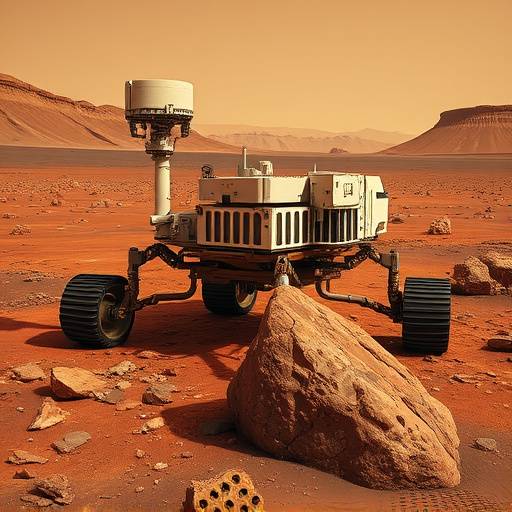
NASA's Perseverance rover diligently searching for signs of ancient microbial life on Mars.
Closer to home, missions to Mars continue to captivate the public imagination. The Perseverance rover, equipped with advanced instruments, is actively seeking evidence of ancient microbial life on the Red Planet. Its sample-caching system, designed to return Martian rocks to Earth for detailed analysis, is a monumental undertaking that could revolutionize our understanding of planetary habitability and the origins of life itself. The prospect of studying extraterrestrial geology in terrestrial labs is a tantalizing one, promising insights not only about Mars but also about the geological processes that shape all rocky planets, including our own.
Breakthroughs in Biological Sciences and Medicine
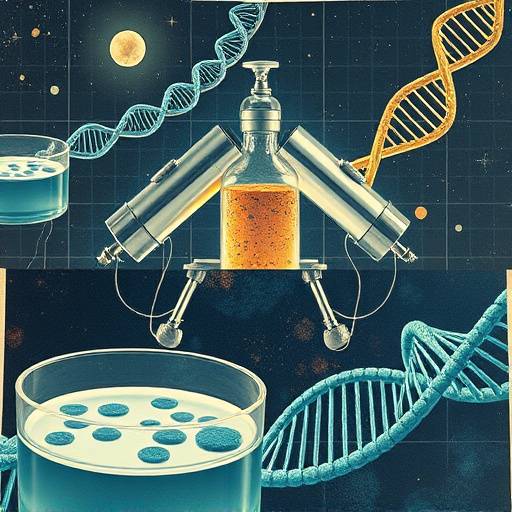
The realm of biology and medicine is another frontier where innovation is rapidly transforming our lives. Researchers are making significant strides in genetic engineering, particularly with CRISPR-Cas9 technology. This revolutionary tool allows scientists to precisely edit DNA, opening up new avenues for treating genetic diseases, developing more resilient crops, and understanding fundamental biological processes. While ethical considerations are paramount, the potential therapeutic applications are immense, offering hope for conditions previously considered incurable.
The field of neuroscience is also experiencing a renaissance. Advances in brain imaging techniques, coupled with sophisticated computational models, are allowing scientists to map neural pathways and understand the complex mechanisms underlying consciousness, memory, and disease. Efforts to develop novel treatments for neurodegenerative disorders like Alzheimer's and Parkinson's are gaining momentum, fueled by a deeper understanding of the brain's intricate circuitry. Furthermore, the burgeoning field of synthetic biology is exploring the creation of novel biological systems and functions, blurring the lines between living and artificial organisms.

A detailed view of a healthy human cell, illustrating the complex machinery of life.
The Quantum Realm and Future Technologies
At the subatomic level, quantum physics continues to challenge our intuition and unlock extraordinary possibilities. Quantum computing, once a theoretical concept, is rapidly moving towards practical application. These machines, leveraging the principles of superposition and entanglement, have the potential to solve problems that are intractable for even the most powerful classical supercomputers. Such advancements could revolutionize fields like drug discovery, materials science, and artificial intelligence, leading to unprecedented leaps in innovation.
Beyond computing, quantum mechanics is underpinning advancements in secure communication, advanced sensors, and fundamental research into the nature of reality. The ongoing quest to unify quantum mechanics with general relativity, the theory of gravity, remains one of the greatest challenges in theoretical physics. Physicists are exploring theories like string theory and loop quantum gravity, seeking a single framework that can describe all the fundamental forces and particles in the universe. This pursuit is not merely an academic exercise; a deeper understanding of the universe's fundamental laws could unlock technologies we can barely imagine today.
Environmental Science: Innovations for a Sustainable Future
The pressing challenges of climate change and environmental sustainability are driving innovation across various scientific disciplines. Researchers are developing new methods for carbon capture and storage, exploring advanced renewable energy technologies, and creating more efficient recycling processes. The study of ecosystems, from the deepest oceans to the highest mountains, provides critical data for conservation efforts and policy-making. Understanding the delicate balance of nature is crucial for ensuring a healthy planet for future generations.
Innovative approaches to agriculture, such as vertical farming and precision agriculture, are aiming to increase food production while minimizing resource use and environmental impact. Furthermore, advancements in materials science are leading to the development of biodegradable plastics, sustainable building materials, and more efficient energy storage solutions. These efforts underscore the vital role of science in addressing global challenges and building a more sustainable future.
Key Scientific Pursuits in Focus
- The search for extraterrestrial intelligence (SETI) and the exploration of potentially habitable exoplanets.
- Developing novel treatments and preventative measures for complex diseases through advanced genetics and immunology.
- Advancing artificial intelligence and machine learning by drawing inspiration from biological systems and quantum phenomena.
- Understanding and mitigating the impacts of climate change through advanced modeling, renewable energy research, and conservation science.
- Exploring the fundamental nature of matter, energy, space, and time through particle physics and cosmology.
The journey of scientific discovery is ongoing, a testament to human curiosity and ingenuity. At Global News Today, we are dedicated to illuminating this journey, bringing you the stories that shape our understanding of the world and our place within it. Join us as we continue to explore the frontiers of knowledge.
"The important thing is not to stop questioning. Curiosity has its own reason for existing." Albert Einstein